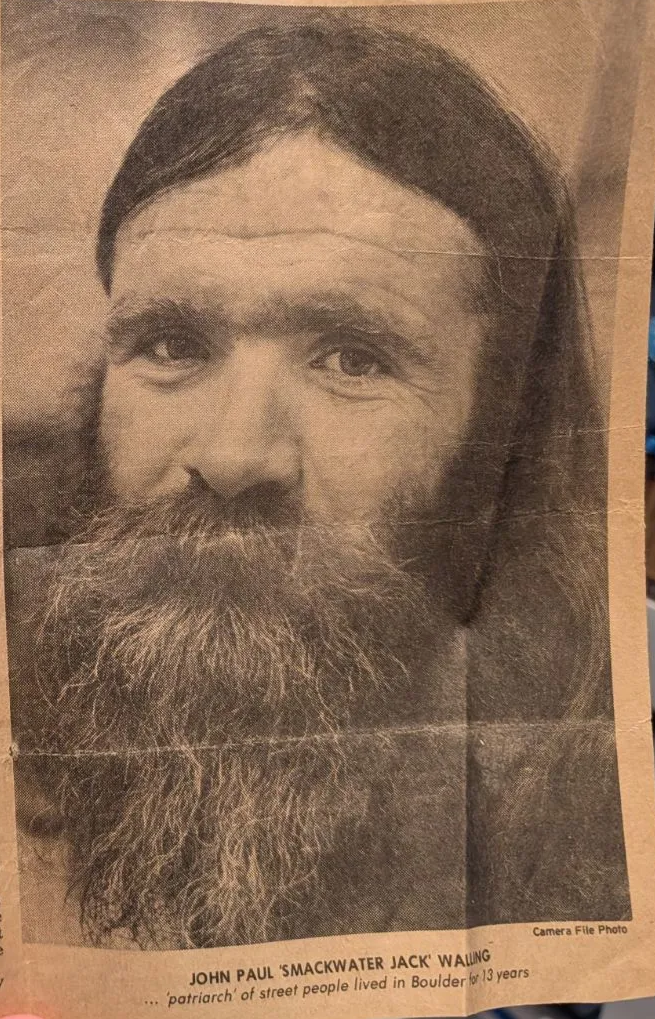
Smackwater Jack
I was fifteen in 1979 when I met the man everyone on the Boulder Mall called Smackwater Jack. Nobody really knew where the name came from. On Pearl Street, nicknames just… appeared—like music drifting from a street performer. Some faded. Some stuck. His did.
Jack was hard to miss. Big. Broad. The kind of weight that comes from years of hard living. His hair hung long and tangled, streaked with gray, and his beard looked like it hadn’t seen a razor in years. Steel-toed boots—dusty, sometimes muddy—anchored him to the ground like he’d been standing there forever.
But if you looked past all that…you saw his eyes. Deep blue and kind.
At the time, I was a runaway from Illinois, living on that same mall. Alone. Barely Fourteen and pretending I wasn’t.
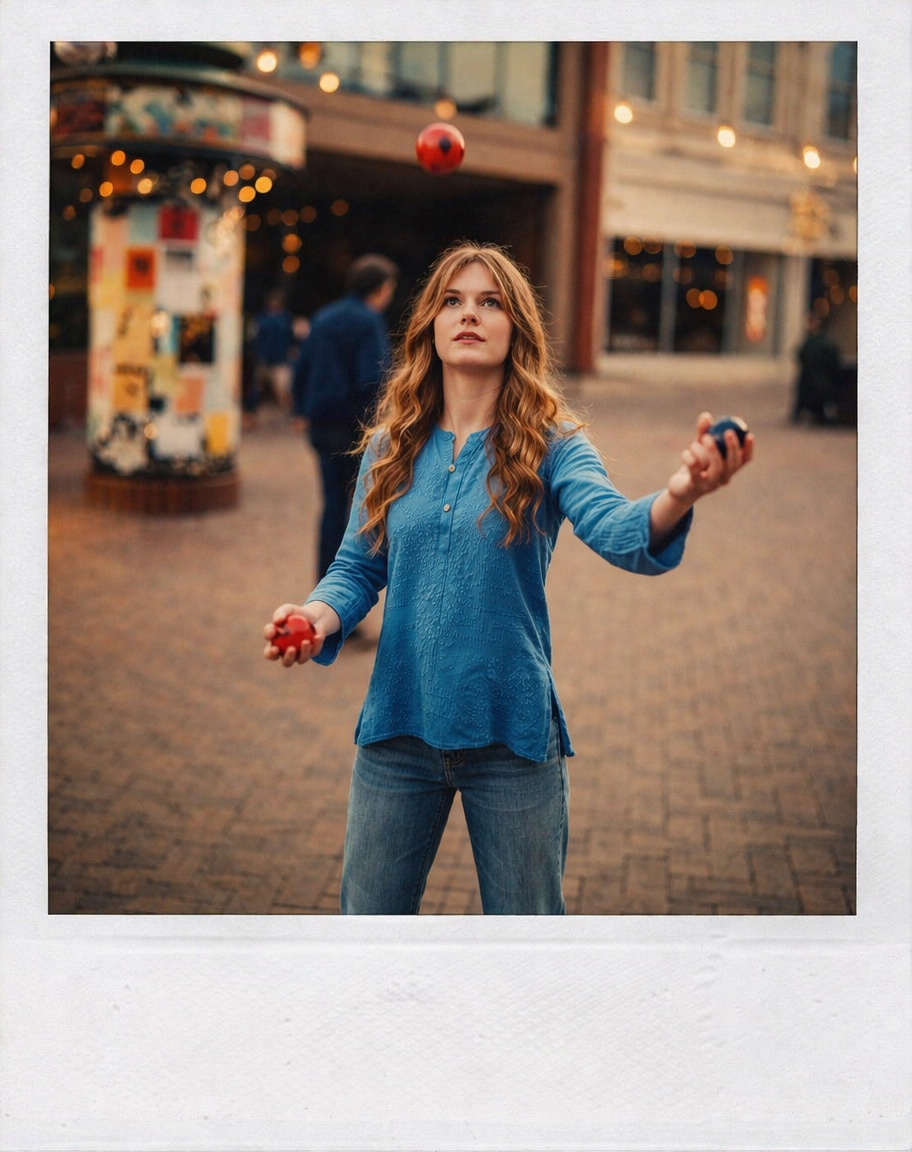
The transients gathered near the old courthouse—musicians, jugglers, dancers, travelers, drifters. And then there were people like me… hovering at the edges, learning how to disappear.
Jack knew I was from Illinois too. South Side of Chicago. Maybe that’s why he watched out for me. Or maybe it was because he had a daughter named Lisa that was born in Ottawa, IL. Whatever the reason… he kept an eye on me.
Most days I stayed quiet. Being invisible has its advantages when you don’t belong anywhere. But one afternoon—bright, loud, full of summer—I made the mistake of having an opinion. Someone asked what I thought about America. And like some fourteen-year-olds who thinks they’ve figured it all out…
I gave it. I said I didn’t like it. The violence. The wars. Poverty. The unfairness. My situation. All of it. I was angry. And I sounded like it.
While I was talking, Jack watched me. Not dismissive. Not annoyed. Just… listening. When I finished, he nodded once.
“Come here,” he said. “Sit with me a minute.”
We sat on a bench, in front of Falafa King and Fred’s Restaurant. Up close, I could see the years written across his face. Sun, hardship, exhaustion. He looked old to me then. Now I know… he probably wasn’t; he wasn’t even 40 yet.
He told me he’d been in Vietnam. Not dramatically. Not bitterly. Just… plainly. He talked about being drafted. About believing in what he was doing at first. About pride. And then he told me what it was really like. Villages burned because orders were orders. Women and children caught in things they never chose.
Heat. Mud. Fear. Confusion. Drugs. The kind of chaos that makes everything stop making sense.
When he came home, they told him not to wear his uniform off the plane. The country didn’t want to see them. Didn’t want to hear them. Didn’t want to remember. His wife had moved on with his two young girls. He said it without anger. Like he’d already made peace with it.
Here was a man, that served his country and although they were treated so badly upon their return, he loved his country.
Then he looked at me. “You don’t know how lucky you are,” he said. He told me about poverty in Vietnam. About people with nothing—no food, no clean water, no way out. He said even the poorest people in America had opportunities most of the world couldn’t imagine.
And then he said something that never left me:
“You can criticize your country… but you better understand it first.”
That was the moment something shifted in me.
Here was a man who had been through hell…came home to rejection…lost his family…and ended up homeless on a pedestrian mall—…and still believed in possibility. More than I did.
But Jack didn’t just talk about kindness. He lived it.
I remember one month, he got his food stamps. Most people would’ve stretched that out carefully—survival math. Jack went to Safeway. Bought everything.
Hot dogs. Buns. Chips. Soda. Charcoal. Condiments.
Then he spread the word. Smackwater Jack was throwing a picnic.
People came. Two hundred at least. Transients. Travelers. Locals. Tourists. Even cops who knew him by name. Grills smoked all afternoon. Burgers sizzled. Music filled the air. People brought more food. And Jack?
He stood in the middle of it all—laughing, cooking, making sure everyone ate.
I’m sixty-one now. And I still remember that day; I remember Jack, John Paul Wallings.
Then years later, on a bitter cold night in January, Jack went into a band shelter to sleep. He’d been drinking. Like a lot of men who carried things too heavy to put down. The cold didn’t care.
Sometime during the night…he died of hypothermia in that band shelter.
The news spread fast. It hit hard.
Jack had become something people didn’t even realize they depended on.
At his funeral, more than four hundred people showed up. Four hundred.
For a man who owned almost nothing.
They spoke about his kindness. His military service. The meals he shared. The way he saw people—really saw them.
I think about that number sometimes. Four hundred lives touched by a man the world might have overlooked. And I remember the little things.
I remember the pastry shop on the mall dumping leftover donuts into black bags at closing time. Jack would always say:
“Let the kid go first.” Making sure I had something before I had gone to sleep. That was Smackwater Jack.
Steel-toed boots. Kind blue eyes. A heart big enough to feed a park full of strangers.
And a teenage runaway who thought she understood the world…
Where I learned something that summer on a bench in Boulder.
I miss him and my children grew up knowing all about him. RIP John Paul Wallings.